

Custom Synthesis
What is Custom Synthesis?
Chemical synthesis is the artificial execution of chemical reactions to obtain one or several products. This occurs by physical and chemical manipulations usually involving one or more reactions. In modern laboratory uses, the process is reproducible and reliable.
Why Choose Us
Our factory
Sichuan Biosynce Pharmaceutical Technology Co.,Ltd. was founded in 2008. Biosynce specialized in developing, supplying and marketing of pharmaceutical intermediates, API and fine chemical products.
Our products
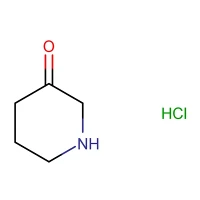
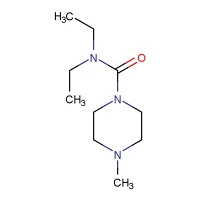
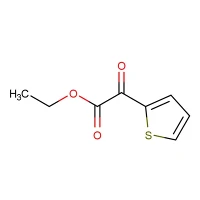
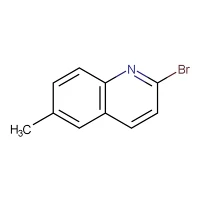
Our products are including Pyrrole Series, Piperazine Series, Pyridine Series, Quinoline Series and Piperidine Series, also we provide CDMO, CRO and customized synthesis service for domestic and foreign customers.
R&D
Our R&D team is composed of highly qualified and experienced doctors and masters, with first-class domestic and foreign pharmaceutical chemistry industry backgrounds, rich R&D and management experience. We can continuously update the product library according to customer needs, and provide more than thousands of products in stock, with packaging ranging from grams to tons, and new stock products are added every day.
Production market
Biosynce have an independent R&D and inspection center to strictly test the quality of products and provide customers with high quality products, our products are widely exported to North America, Europe, Asia and Africa. We aim to establish long-term and mutually beneficial relationships with customers and offer excellent products and services.
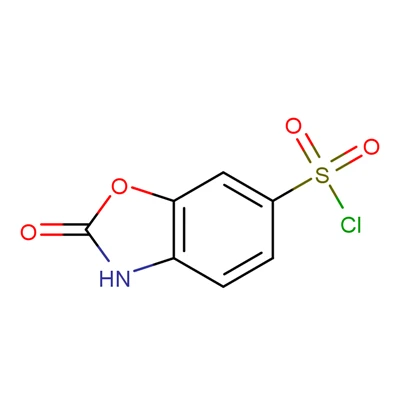
![2-Oxo-2,3-dihydrobenzo[d]oxazole-6-sulfonyl Chloride CAS 27685-90-1](/uploads/40914/small/2-oxo-2-3-dihydrobenzo-d-oxazole-6-sulfonyl00dff.png)
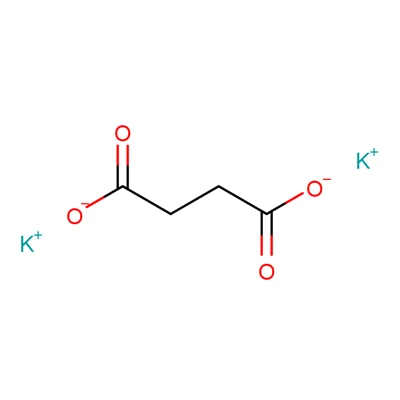
They are divided into three main forms: biocides, active pharmaceutical ingredients and specialty chemicals. These chemicals are never sold in their natural state. They are preceded by the addition of substances such as non-creative pigments, excipients, and solvents.
Active pharmaceutical ingredients - are then made into different doses of drugs.
Fungicides are chemicals that are used to kill weeds and pests. They include pesticides and herbicides.
Specialty chemicals are used in various processes, such as the manufacture of ceramics, plastics, glass additives, and disinfectants or antioxidants.
Application Of Di-N-Hexyl Phthalate
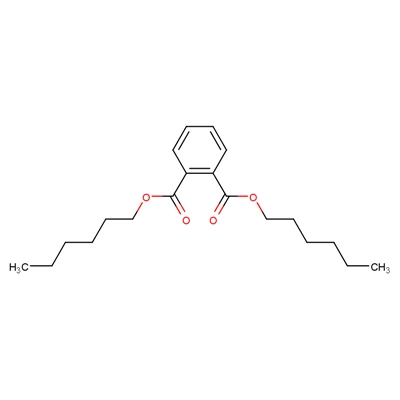
DI-N-HEXYL PHTHALATE, with the chemical formula C20H30O4 and CAS registry number 68515-50-4, is a compound commonly used as a plasticizer in various industries. This colorless liquid, also known as DnHP, is characterized by its phthalate ester structure. It is primarily used to increase the flexibility and durability of plastics, such as polyvinyl chloride (PVC), making them more suitable for applications in products like vinyl flooring, wire and cable insulation, and automotive parts. DI-N-HEXYL PHTHALATE is also used as a solvent in some formulations and as a fragrance ingredient in personal care products. It is important to note that there are concerns about the potential health effects of DI-N-HEXYL PHTHALATE, particularly its potential to disrupt the endocrine system. Therefore, regulatory restrictions and guidelines exist to limit its use and exposure in certain applications.
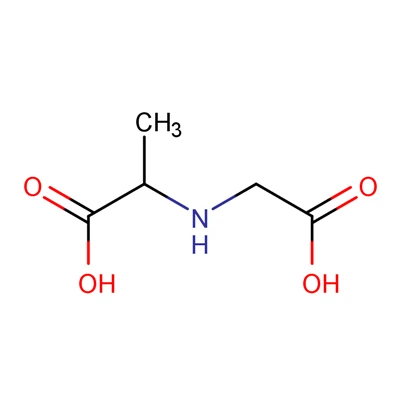
Chemical Reactions Analysis of (S)-2-((Carboxymethyl)Amino)Propanoic Acid CAS 56857-47-7
Types of Reactions
(S)-2-((Carboxymethyl)amino)propanoic acid undergoes various chemical reactions, including:
Oxidation: The amino group can be oxidized to form corresponding oxo derivatives.
Reduction: The carboxyl group can be reduced to form alcohol derivatives.
Substitution: The amino group can participate in nucleophilic substitution reactions to form amides and other derivatives.
Common Reagents and Conditions
Common reagents used in these reactions include oxidizing agents such as potassium permanganate for oxidation, reducing agents like lithium aluminum hydride for reduction, and acyl chlorides for substitution reactions .
Major Products Formed
The major products formed from these reactions include oxo derivatives, alcohol derivatives, and amides, depending on the specific reaction conditions and reagents used .
1. As solvent: Sputin has good solubility, widely used as solvent in organic synthesis reaction.
2. Chemical synthesis intermediates: Sputin can be used as an intermediate for synthesizing other compounds in organic synthesis, such as the synthesis of spices, pesticides and so on.
3. Bromoacetic acid reducing agent: Sputin can be reacted with bromoacetic acid to form bromoacetophenone which is useful for ring-forming reaction.
Method of Preparation:
(S)-2-((Carboxymethyl)amino)propanoic acid CAS 56857-47-7 is conventionally prepared by the following methods:
1. Acetone dehydration: Acetone is heated to 60-70°C, and the dehydration reaction is carried out under acidic conditions to produce spudin.
2. Ethanol deoxygenation: React ethanol with sodium hydroxide at low temperature to deoxygenate to produce Sputin.
3. Acetic acid acylation: React acetone with acetic acid to form Sputin and acetic acid.
Biological activities of indole
Indole is also known as benzopyrrole which contains benzenoid nucleus and has 10 π-electrons (two from lone pair on nitrogen and double bonds provide eight electrons) which makes them aromatic in nature. Similar to the benzene ring, electrophilic substitution occurs readily on indole due to excessive π-electrons delocalization. Indole is an important heterocyclic system that provides the skeleton to lysergic acid diethylamide (LSD), strychnine, and alkaloid obtained from plants. Physically, they are crystalline colorless in nature with specific odors. The addition of the indole nucleus to medicinal compounds that is biologically active pharmacophore made it an important heterocyclic compound having broad-spectrum biological activities. Due to this, researchers took interest to synthesize various scaffolds of indole for screening different pharmacological activities. Various natural compounds contain indole as parent nucleus for example tryptophan. Indole-3-acetic acid is a plant hormone produced by the degradation of tryptophan in higher plants. Derivatives of indole are of wide interest because of their diverse biological and clinical applications.
Antiviral activity
6-Amino-4-substitutedalkyl-1H-indole-2-substitutedcarboxylate derivatives were prepared and reported as antiviral agents by Xue et al. In all tested compounds, compound methyl 6-amino-4-isobutoxy-1H-indole-2-carboxylate (1) showed inhibitory activity against influenza A with IC50 = 7.53 μmol/L and the highest selectivity index (SI) value 17.1 to CoxB3 virus.
Anti-inflammatory and analgesic activities
Indole-based chalcone derivatives reported as COX-1 and COX-2 inhibitor by Ozdemir et al. Compound 3-(5-Bromo-1H-indol-3-yl)-1-(4-cyanophenyl)prop-2-en-1-one (21) and compound 3-(5-methoxy-1H-indol-3-yl)-1-(4-(methylsulfonyl)phenyl)prop-2-en-1-one (22) were found to demonstrate a significant activity .
Anticancer activity
Zhuang et al. reported a series of 2, 4-disubstituted furo[3,2-b]indoles for anticancer activity against the (human NCI-60 ) tumor cell lines. Among the tested compounds, compound (5-((2-(hydroxymethyl)-4H-furo[3,2-b]indol-4-yl)methyl)furan-2-yl)methanol (47) demonstrated the best anticancer activity. The analysis of results suggests that the fingerprint of the compound 48 is similar NSC-754549.
Anti-HIV activity
Kasralikar et al. reported a series of novel indolyl and oxochromenyl xanthenone derivatives and performed their molecular docking studies as an anti-HIV-1. In tested compounds, compounds 9-(1H-indol-3-yl)-7-methoxy-3,3-dimethyl-3,4-dihydro-2H-xanthen-1(9H)-one (64), 9-(1H-indol-3-yl)-3,3-dimethyl-3,4-dihydro-2H-xanthen-1(9H)-one (65) and 7-bromo-9-(1H-indol-3-yl)-3,3-dimethyl-3,4-dihydro-2H-xanthen-1(9H)-one (66) were found to be most active compounds .
Antioxidant activity
Di(1H-indol-3-yl)sulfane derivatives were prepared and evaluated as antioxidants agents by Silveira et al. Compound di(1H-indol-3-yl)sulfane (98) exhibited antioxidant activity in ferric reducing ability of plasma (FRAP), 2,2-Diphenyl-1-picrylhydrazyl (DPPH) and 2,2'-Azino-bis(3-ethylbenzothiazoline-6-sulfonic acid ) (ABTS) assays at micromolar concentration.

Biosynce have an independent R&D and inspection center to strictly test the quality of products and provide customers with high quality products, our products are widely exported to North America, Europe, Asia and Africa. We aim to establish long-term and mutually beneficial relationships with customers and offer excellent products and services.